Walk into a well-run assisted residing network on a weekday morning and also you’ll pay attention espresso grinders, see workout bands draped over chair backs, and catch a whiff of pancakes from the bistro. Residents circulate at their possess speed. Some shuffle collectively to a balance class, others linger over the newspaper. Now step into a dedicated memory care neighborhood. The energy shifts. The area is quieter and more controlled, hallways are shorter and loop back on themselves, and there are visual cues anywhere you look: a shadow field external each and every room with own family snap shots, contrasting paint on the bathroom doorway, a basket of folded towels at a desk to busy the hands of individual who used to work in hospitality.
Those variations usually are not beauty. They’re intentional design responses to very various wants. Families traditionally beginning their seek with the phrases assisted living, then find out memory care later while a guardian starts off to wander, mistake day for nighttime, or emerge as agitated by way of noise and confusion. Even for gurus in senior residing, the line among these fashions can blur seeing that many campuses present equally. The clearest means to tell them apart is to analyze the atmosphere. Design shapes day after day lifestyles.
Two care versions that share a roof, now not a blueprint
Assisted dwelling grew out of a wish to substitute institutional nursing residences with puts that really feel like abode. The promise is independence with a security internet. Residents have confidential flats, their possess fixtures, and management over their workouts. Staff supply assistance with bathing, dressing, medicine, and meals, and so they coordinate transportation and pursuits. The ambiance helps option and quantity. The dining room may have 3 menus, the courtyard a tomato patch and chess tables, the corridors lengthy sufficient to make brisk walkers completely satisfied.
Memory care constructed later, out of not easy tuition. People dwelling with Alzheimer’s or different dementias do no longer benefit from the similar buffet of techniques. Too a whole lot resolution can create tension. Long hallways invite elopement. Loud dining rooms purpose sensory overload that leads to refusal to consume. Designers and operators started out to invite a exclusive set of questions: what enables somebody with quick-time period reminiscence loss feel grounded, and what reduces danger without stripping dignity?
That query alterations the entirety from the color of the carpet to the sightlines from the nurse station.
Wayfinding that works with the mind, not in opposition t it
A adult in assisted dwelling is dependent on wide-spread approaches to navigate: read the room range, determine the elevator sign, turn at the painting of a sailboat. If she gets misplaced, she can ask at the the front desk. In reminiscence care, these options fray. Reading comprehension can range with the aid of the hour. Abstract artwork confuses as opposed to guides.
The developed ecosystem compensates. You’ll see quick, looping corridors that continually go back residents to a universal area. The target is to take away dead ends and lengthy instantly runs that experience like tunnels. Room entrances stand out with prime-evaluation paint at the doorframe, such as a abode’s the front door rather than an additional nameless panel. Next to every single door, a memory box holds just a few tactile objects and images from the resident’s existence: a miniature fireplace truck for a retired firefighter, cloth swatches for a seamstress, a photo from a marriage day. Those cues do greater than assistance a person discover a room. They spark micro-moments of realization that calm the apprehensive manner.
Signage in memory care is predicated on icons and undeniable words, no longer cursive fonts. Think of a toilet door with a common lavatory image and the observe “Bathroom” beneath in widespread print, positioned at eye degree. I as soon as watched a resident in mild-stage dementia walk previous two doors classified “Restroom” with no a look, then march with a bit of luck into the 0.33 while her daughter taped a graphic of a sink subsequent to the deal with. Validation beats preparation.
In assisted residing, wayfinding goals for genre and clarity. Residents can control a larger campus footprint, assorted wings, and elevators sprinkled at some stage in. They receive advantages from seating nodes lower than windows where buddies certainly stop to talk. In memory care, the ones resting spots nonetheless exist, yet they're put at predictable periods and typically embrace calming props: a folded duvet to stroke, a basket of plush scarves.
Safety with the aid of layout, no longer lockdown
People pay attention that reminiscence care is “stable” and photo bars on windows. The reality is extra nuanced. The objective is to enable move inside a secure perimeter and to make safeguard well-nigh invisible. After a decade of going for walks those areas, I’ve observed that the high-quality reminiscence care groups are still, within the literal experience. No slamming doors, no harsh alarms. Doors in the main use not on time egress hardware that signals personnel if driven but offers time to redirect with a pleasant face in place of a blaring siren. Outdoor courtyards sit down entirely enclosed with the aid of the constructing or a discreet fence, with going for walks paths in a light loop and gates that seem more like backyard trellises than an exit.
Floors in reminiscence care have matte finishes to cut glare, which humans with dementia can interpret as wet or choppy. Patterns are small-scale and coffee contrast. A prime-comparison border, above all one who feels like a black mat, can also be perceived as a gap and purpose individual to freeze. You learn those particulars by using staring at residents stop in their tracks at a ornamental threshold. In assisted residing, flooring may be more adventurous. Designers use neighborhood rugs to quarter seating, and richer shade palettes create diversity. Slip resistance matters in all places, but the visible psychology is less fraught.
Kitchens in reminiscence care are a exceptional tale as well. You may also see a residential-genre kitchen used for supervised pursuits like baking cookies, however the stoves lock. Secure medication rooms hide in the back of personnel-solely doorways. Laundry gadget, if available to residents, consists of tasks like folding and sorting rather than operation of machines. In assisted living, you’ll locate more autonomy. Many residences have kitchenettes with microwaves, and some citizens insist on cooking breakfast on a transportable griddle. Staff video display, yet independence is the unfairness.
Apartments that act like nests
Assisted dwelling residences repeatedly mimic small condos. One-bed room items with a dwelling room, bed room, kitchenette, and a personal bath be offering a feel of traditional life. Closets can grasp greater than a season’s price of garments. The the front door should be would becould very well be several turns down a corridor from the elevator, and that’s high quality. Residents arrange furniture round their behavior: a interpreting chair via the window, a TV at simply the excellent attitude for sporting activities.
Memory care apartments skew smaller and less complicated. Less area capacity fewer alternatives to lose goods and less power spent transferring from room to room. Private bogs are sized for group tips, with roll-in showers, built-in benches, and seize bars positioned in which a person evidently reaches. The toilet contrasts with the ground and wall coloration, so it stands proud. Lighting is shiny but gentle, traditionally with circadian tuning. You won’t see complete kitchens. Hotplates and ovens invite probability for any person who forgets they are on. Storage is shallow and equipped. A resident with dementia can omit that objects exist if they're out of sight, a phenomenon known as agnosia. Open shelving or mesh-entrance cupboards allow a person to test visually and discover a sweater or a favorite mug with no rummaging.
The ameliorations proceed at the door. In memory care, body of workers can override locks to go into at some point of a fall danger position. Doors might auto-as regards to keep a calm sound envelope. In assisted living, residents regularly have basic keyed or fobbed entries, repeatedly even deadbolts, and employees knock and wait like travelers.
Dining that respects sensory changes
Food anchors the day, relatively as different workouts fade. The noise, lighting fixtures, and tempo of dining areas can make or destroy a community.
Assisted residing eating rooms try for number. You would possibly have breakfast served from 7 to nine:30, lunch with three entrees, and a soup and salad bar. Tables for 2 and six blend social energy. Staff take orders like a restaurant, and citizens linger. Bright chatter is part of the attraction.
Memory care dining is quieter and extra structured. Smaller rooms reduce reverberation. Table surfaces assessment with plates, so the meals pops visually. White mashed potatoes on a white plate can vanish for person with visual processing differences. Adaptive utensils seem accepted but characteristic slight curves or better handles. Staff plate food in undemanding, separated displays to scale down determination fatigue. Finger meals get greater focus than you may predict, no longer since citizens are treated like babies, but on the grounds that many people with dementia lose self assurance with utensils. A slider, baked hen strips, and roasted greens minimize into hand-friendly pieces allow any one to consume independently longer.
Time topics too. Some citizens are hungriest at 10 a.m. and four p.m. Appetite can dip at noon. The superior reminiscence care groups run snack carts with protein-rich recommendations and tailor mealtimes to the resident’s circadian rhythm. I once worked with a gentleman who had been a night time shift mechanic. We stopped battling his 11 p.m. starvation and in its place wrapped a heat breakfast burrito every single evening along with his trendy salsa. Behavior trouble dropped by way of 0.5 inside of a week.
Activity programming that builds on procedural memory
Assisted residing calendars are eclectic: yoga at nine, a lecture on local background at two, a bus travel to the farmer’s market on Saturday. Residents favor what they prefer and pass the leisure.
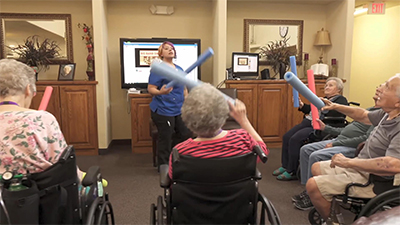
In memory care, the day is paced more intentionally and leans on procedural memory, the type that persists whilst brief-time period reminiscence falters. Folding warm towels, sorting buttons by way of shade, watering herbs, or sanding a block of timber offer rationale and soothing repetition. Music exhibits up anywhere, and with impressive rationale. Familiar songs easy up brain areas that continue to be resilient in dementia. A resident who can’t consider breakfast will sing each verse of a Johnny Cash song phrase-appropriate. Activities are much less about novelty and greater about ritual. The Thursday baking crew will become a lighthouse in the week, besides the fact that residents can’t name the day.
Staffing follows suit. Assisted dwelling hobby administrators feel broadly and manage a crowd. Memory care existence enrichment requires near observation of humans and regular adjustment. A exact memory care program looks quiet on paper however feels busy in human being, with an awful lot of micro-engagement: a 5-minute hand massage right here, a lap round the courtyard there.
Staffing ratios and working towards that mirror complexity
One of the so much large variations is invisible on a travel sheet: staffing. Assisted dwelling may just run with a ratio that assumes residents set up quantities in their day independently. Overnight group of workers may perhaps conceal distinct floors, responding as considered necessary. In memory care, more hands are required, surprisingly for the time of “sundowning” hours in overdue afternoon. Teams are trained in de-escalation, validation, and communique techniques that prioritize emotion over common sense. Instead of correcting, they sign up. If a resident anxiously insists she ought to catch a bus to paintings, a expert caregiver may offer to lend a hand % a lunch, then advocate they take a seat at the same time while the bus warms up. Ten mins later, whilst the anxiety has handed, the bus will become a reminiscence and the day can move on.
Medication administration differs too. Assisted residing citizens most commonly self-administer targeted meds with oversight. In memory care, team of workers aas a rule cue or administer such a lot medicinal drugs to make certain security and compliance. That shifts staffing styles towards greater remedy technicians in the course of top times.
The role of science is supportive, now not intrusive
Technology can develop equally settings, but it may want to recede into the heritage. Wander leadership in memory memory care care could use discreet ankle bands or cameras in user-friendly locations monitored devoid of turning the distance into a surveillance quarter. Motion sensors in bathrooms can cue personnel if any person is prone to falls, and mattress sensors can alert if a resident who mostly sleeps soundly has been up more than one occasions, signaling a urinary tract inflammation or pain. In assisted living, wearable pendants and wise domestic options like voice assistants support independence. Residents can say “activate the lighting fixtures” or “call the the front table,” and the formula does the rest. The guiding precept is decision: era may want to by no means corral citizens into a unmarried manner of living.
How respite care suits into the picture
Families more often than not become aware of the transformations between assisted living and memory care simply by respite care. A respite keep is a brief-time period, provided stay that provides caregivers a break or lets anyone “scan drive” a group after a health facility discharge or in the time of a kinfolk commute. In assisted residing, respite fits folks who can follow guidelines, take pleasure in staff foods, and transfer correctly with out regular cueing. Think of a senior recuperating from a hip alternative who wants lend a hand with bathing and medicinal drug for a month.
In reminiscence care, respite care appears varied. The intake approach carries a close existence tale and behavior stock. Staff be taught that Mr. Alvarez not ever wears long sleeves considering that he grew up in Oaxaca, that Mrs. Chen liquids heat water now not bloodless, that Mr. Patel prefers cumin over cinnamon in oatmeal. Those small details count number. The first forty eight hours should be would becould very well be bumpy for any person who doesn’t comprehend the rental and wonders in which the spouse and children went. Memory care groups plan for that with one-to-one improve, popular music at the competent, and a simplified ambiance. Success is measured by way of alleviation and engagement, no longer by means of the variety of outings.
Respite may also make clear lengthy-term desires. If wandering or agitation turns into a everyday safe practices hazard all the way through a respite in assisted dwelling, it’s a effective sign that memory care is the excellent subsequent step. Conversely, a man with slight cognitive impairment, nevertheless oriented and social, might thrive right through an assisted residing respite, highlighting a window of time whilst assisted living is most excellent and a good suggestion.
Family life contained in the design
Families play otherwise in every house in view that the environments invite unique styles of visits. In assisted dwelling, families by and large meet inside the residence, convey board video games, walk to the neighborhood bistro, or take a trip off campus. In reminiscence care, visits may match surest in widely wide-spread locations curated to spark reminiscing: a small “the front porch” vignette with a rocking chair and a reveal door, or a workshop corner with safe hand equipment and a pegboard. Children do smartly with undemanding, tactile events, like putting clothespins in a tin or “supporting” water crops. Grandchildren who comprehend the best way to keep on with the resident’s lead, other than quiz for info, find it more uncomplicated to glue. The space cues those patterns through what it bargains.
The atmosphere additionally helps relatives instructing. I’ve stood with daughters who ultimately understood their father’s worrying pacing after they noticed the visual circulation of the memory care hallway with its loop and the way workers calmly matched his steps. In assisted dwelling, a son learns the weekly rhythm of his mom’s bridge organization and plans his visits formerly. The buildings supply scripts for fulfillment with out a phrase of training.
Design important points that rely more than a chandelier
A few micro-points continuously separate potent memory care from well-known senior housing:
- Contrast where it counts: rest room seats, grab bars, dishware, doorframes, and mild switches stand out opposed to their backgrounds to support the eyes and mind paintings collectively. Lighting that respects the clock: vivid, blue-enriched gentle inside the morning to cue wakefulness and hot, cut down pale within the night time to in the reduction of agitation. Handrails at the precise height: continual rails down corridors toughen mobility and rhythmic on foot, with hot timber that seems like a domestic handrail, no longer a health center bar. Shadow bins and personalized access spaces: these anchor identity and reduction wayfinding, turning a bedroom door into a entrance door. Purposeful props: baskets of laundry, instrument caddies with secure presents, doll medication for those that reply, and song gamers preloaded with widespread playlists.
Each of these facets appears to be like modest, but together they ease day-to-day residing. In assisted living, you may also nevertheless see comparison and precise lighting, but there’s greater room for flourish: chandeliers over the eating room, art that invites dialogue in place of cueing motion, and architectural drama like a two-story lobby. In reminiscence care, drama motives disorientation. Calm is the function.
Cost, magnitude, and the quiet economics of attention
Families traditionally ask why memory care bills more than assisted residing for the reason that the flats will also be smaller. The reply lies in exertions, coaching, and programming depth. The surroundings is one piece, yet staffing ratios, specialized foods, and extra safety tactics upload to operating costs. A general reminiscence care community has a smaller census than an assisted living floor, yet it consists of comparable or top group of workers phases across all shifts. Attention is costly, and memory care is cognizance-dense by means of layout.

Value is satisfactory measured by means of effects that be counted to the man or women. Fewer falls, larger sleep, much less agitation, and more moments of connection sound tender except you’ve lived the choice. I’ve watched a resident pass from a typical assisted dwelling ground in which he often known as his daughter ten times a day in distress to a memory care nearby in which he stopped carrying his mobile on account that he subsequently felt anchored. The equipped atmosphere did that, together with expert worker's and thoughtful routines.
When assisted dwelling continues to be the perfect fit
It’s tempting to leap directly to reminiscence care at the first signal of forgetfulness. That can backfire. For anyone in early-stage dementia who nevertheless drives, cooks, and enjoys communication, assisted dwelling may possibly provide precisely the perfect steadiness of toughen and autonomy. The house sounds like domestic, the social stimulation keeps the mind active, and employees can observe differences over the years. The secret is to assess candidly: is there a sample of leaving the stove on, getting lost out of doors, or mismanaging medicinal drugs in a means that hazards injury? Is there middle of the night wandering that scares the circle of relatives? Does sensory overload derail foods? If convinced to countless, reminiscence care merits a glance. If not, assisted residing with wonderful oversight, probably paired with brief respite stays in reminiscence care to construct familiarity, can stretch the window of independence.
Evaluating communities through an environmental lens
On excursions, ask to sit, no longer just stroll. The suppose of a spot reveals itself whilst you forestall and watch. In assisted residing, do citizens check out ease charting their own day? Is there preference with no chaos? In reminiscence care, does the space breathe? Are there areas to stroll devoid of encountering stumbling blocks? How do staff respond to a resident who repeats a question? Tone topics as tons as words.
Look for signs that the setting has been established by using factual life. Scuffed baseboards at handrail top suggest folk are the use of the helps. A good-thumbed hobby basket means it is more than a prop. Plates that don’t in shape a catalog photograph will probably be there considering the fact that residents consume better from them. Ask how commonly households go to and where they prefer to sit. Visit at 4 p.m., a time-honored tension factor for agitation often called sundowning, and notice how the space and team take in the vitality. If the tour solely occurs at 10 a.m. on a Tuesday, you’re seeing the satisfactory foot forward.
The human layer on leading of the blueprint
Design units the degree, yet human beings convey it to existence. A memory care crew can soothe a stormy afternoon in approaches partitions by no means will, and a hot assisted residing concierge can flip a cavernous lobby into a commonly used dwelling room. Still, whilst the setting fights the mind, every person traces. When it supports the mind, the body of workers’s qualifications shine and citizens’ strengths express because of. I save a intellectual picture of a memory care backyard from a number of years in the past. The route wound gently beneath a pergola heavy with wisteria. A guy who were a mail carrier paced that loop for twenty minutes on daily basis like a direction he as soon as knew by using center. No one advised him to train. The area just invited it, and his frame remembered how.
That is the quiet genius of proper design in senior residing. Assisted living environments invite autonomy and sort. Memory care environments invite familiarity and calm. Both objective for dignity, simply by way of various routes. Families deciding on among them don’t want to change into architects, but they do gain from watching carefully at how a group’s areas expect the kind of days their loved one will have. When you’ve noticeable adequate of these locations, you learn to belief the rooms that make your shoulders drop and your respiring sluggish. If the space puts you comfortable, it will likely do the comparable for the adult you're keen on.
BeeHive Homes of Albuquerque West
6000 Whiteman Dr NW, Albuquerque, NM 87120
(505) 302-1919